Three-Act. Hero's Journey. Save the Cat. Kishōtenketsu. The Romance Arc. Detective Structure. Pixar Pitch. Snowflake. Seven-Point. Story Circle. The names accumulate. Every framework has its evangelists, its books, its half-page diagram, its specific blogger explaining why it is the only one that actually works. You have read several. You have noticed that most of the diagrams describe the same two or three stories, with the labels rearranged. You suspect this. You also suspect that the choice is not, in fact, arbitrary, and that picking the wrong one might quietly compromise the next eighteen months of work. Both suspicions are correct.
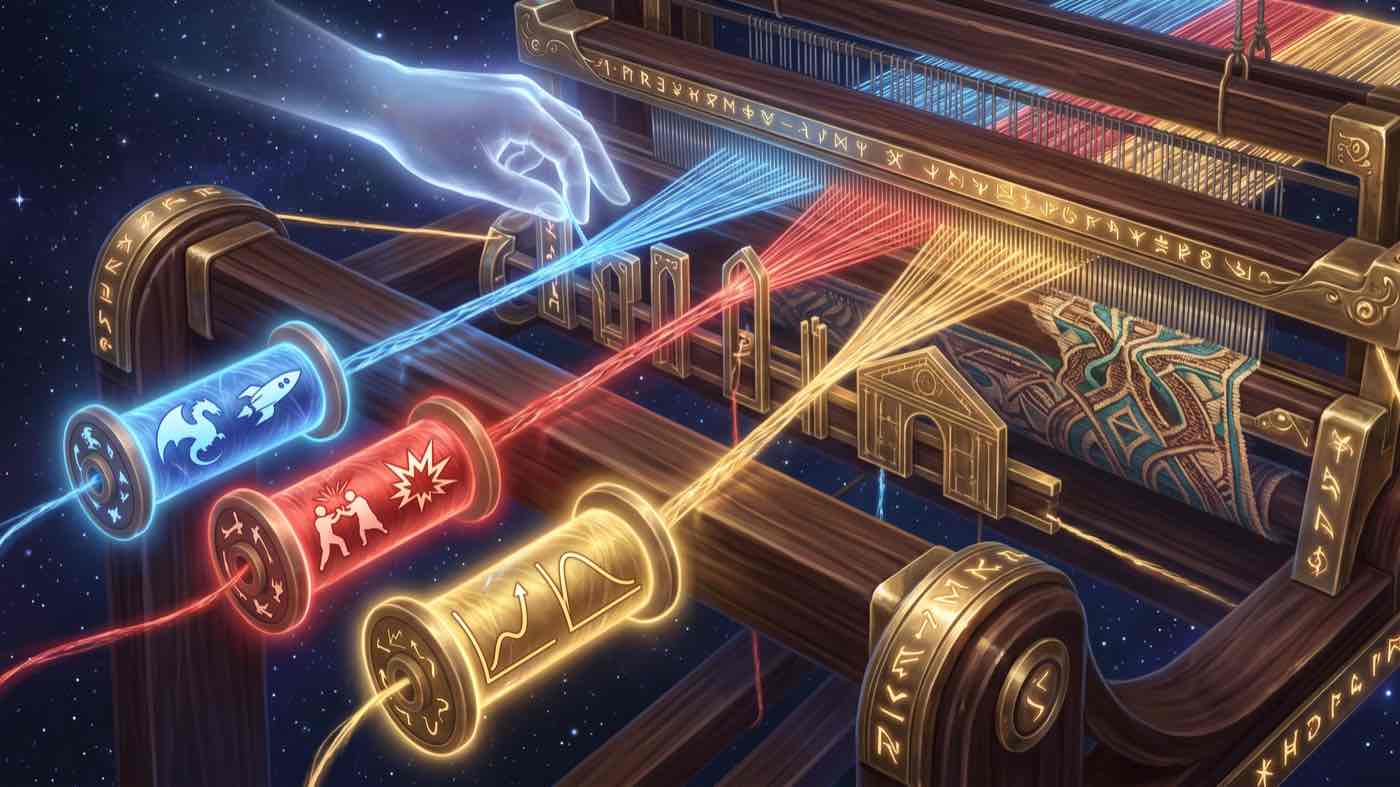
The frameworks are not aesthetic preferences and they are not interchangeable. They are calculated fits to three structural variables: the genre's obligations, the type of conflict at the story's centre, and the shape of the value shift the story is making. The right framework is the one whose architecture most precisely matches all three. The wrong framework will work for fifty pages, then begin to push against the story, then begin to obstruct it. Many stalled drafts in their second year are stalled drafts that picked the wrong framework on day one and have been fighting it since.
The variables, in order:
Genre obligations. Every genre carries a contract — specific obligatory scenes, specific structural beats — that the reader is expecting to encounter. A romance contract is met by an arc that delivers a meet, an attraction, an obstacle, a black moment, and a reunion that proves something about love. A detective contract is met by an arc that delivers a crime, an investigation, a false solution, a complication, and a true solution that plays fair. The contract is what the framework has to honour. A framework whose architecture cannot deliver the contract is the wrong framework, no matter how elegant it is otherwise.
Conflict type. Stories run on three primary types of friction: interpersonal (protagonist against another character), environmental (protagonist against a world, system, or condition), and internal (protagonist against self, or self against self). Each type has structural needs. Interpersonal conflict needs an antagonist whose pressure escalates across acts. Environmental conflict needs an arena whose hostility is specifically targeted. Internal conflict needs visible externalisations of the invisible struggle, and structural beats that mark the protagonist's gradual self-disclosure. A framework calibrated to one conflict type will obstruct another — the Hero's Journey is built for protagonist-against-world transformation and frequently misfits stories whose primary conflict is interpersonal or internal.
Value shift. Theme, expressed structurally, is a directed movement from one state to its opposite or complication. From "love is a transaction" to "love requires surrender." From "trust is weakness" to "trust is the precondition of strength." From "the world is hostile" to "the world contains the people I needed to find." A framework's act-and-beat sequence is, in the abstract, a script for how that movement is proven. Different frameworks prove different shapes of movement. Three-Act proves linear ascending value shifts well; Kishōtenketsu proves shifts where the disruptive twist reveals the protagonist's prior assumptions to have been incorrect; Story Circle proves return-and-changed shifts, where the value of home is reread by the experience of leaving it.
The decision is the matrix. For your idea: what does the genre contract require? What is the primary conflict type? What is the shape of the value shift? Once those three are committed, the framework whose architecture matches them is the framework to use. (And usually, once you have been precise about the three variables, only one framework remains a clean fit. The proliferation of options is mostly an artefact of frameworks being chosen before the variables were committed.)
A few cases, briefly. Three-Act is the workhorse for stories whose value shift is linear and whose primary conflict is the protagonist's external desire meeting structured resistance — the most common shape, which is why the framework is the most common framework. Hero's Journey is calibrated to protagonists whose transformation is the story — a reluctant agent crossing into a world that tests them and returning changed — and overwhelms stories whose protagonists were already engaged. Save the Cat is a Three-Act variant with explicit beat positions, useful for writers who need positional discipline and obstructive for writers who don't. Kishōtenketsu is for stories built around a single disruptive recontextualisation — a turn that reveals what the prior acts have been, retrospectively, about — and is misapplied to stories that need rising conflict. Romance Arc, Detective Structure, and the genre-specific frameworks are calibrated to genre contracts and should not be used outside them. (Romance using the Hero's Journey can technically be done; it usually shouldn't be. The black moment isn't the Abyss.) Story Circle is excellent for return-and-changed shapes; Seven-Point is granular three-act; Pixar Pitch is a compression frame for premise testing rather than a manuscript-length framework. Snowflake is a planning method that wears a framework jacket and is best treated as such.
Two warnings. First, do not select a framework because the books you admired used it; select it because your three variables fit. The books you admired had different variables. The framework was right for them; it may not be right for you. Second, do not refuse to commit to a framework because you've read the right-tool-for-the-job point and now want to design your own. Designing your own framework is a project for the writer who has already used three of them; for a writer who has not yet finished a draft, the existing frameworks are vastly faster routes to the finish line, and the finished draft is the floor.
The reason Scribbard supports ten frameworks is not menu-padding. It is that different stories want different ones. The platform's structure stage asks for the genre, the conflict type, and the value shift before recommending a framework, because that is the order the choice has to be made in. The recommendation is not a verdict — every framework remains selectable; the writer is sovereign — but the recommendation is calculated against the same three variables you would otherwise have to weigh manually, and it is rarely far wrong.
Pick the framework whose architecture matches your three variables, commit it, and move on. The framework chosen well becomes invisible — you will not notice it once you are inside the work, because the architecture stops being a topic and starts being the ground. The framework chosen poorly stays loud, because every scene is fighting it. Loud is the symptom. Match the variables. Move forward.